
Math Language Routine 7
Compare & Connect
Purpose: To foster students’ meta-awareness as they identify, compare and contrast different mathematical approaches, representations, concepts, examples and language. (Zwiers et al., 2017, p.16)
There is more to a problem than its solution.
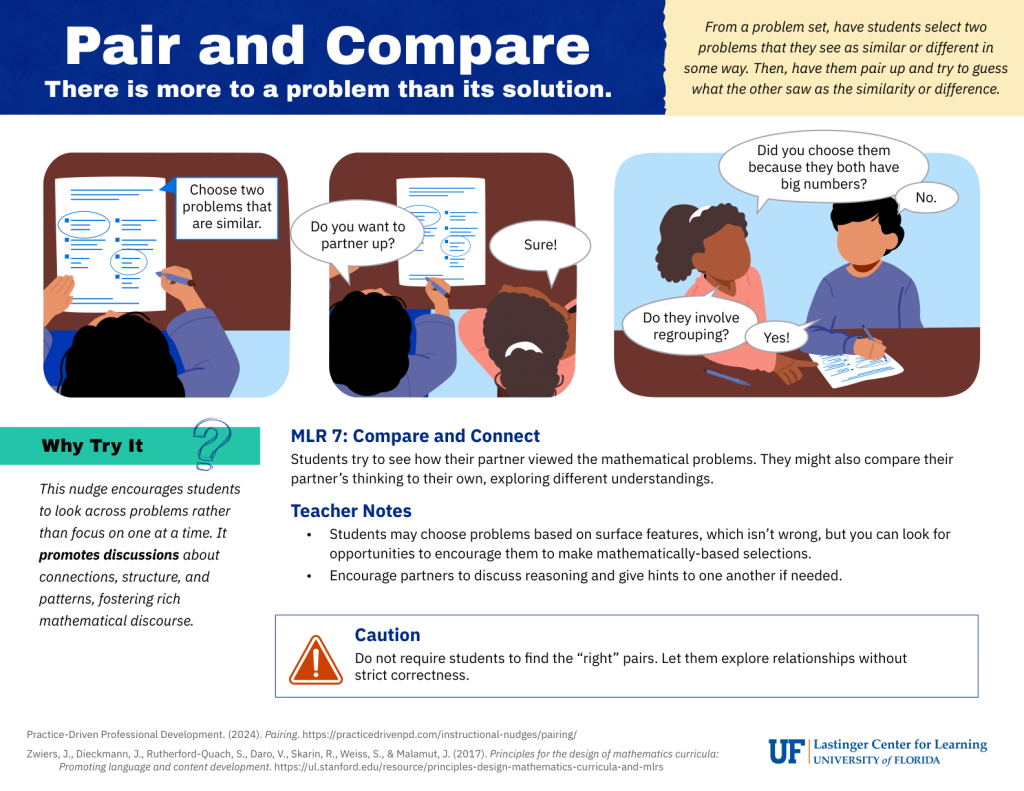
Pair & Compare
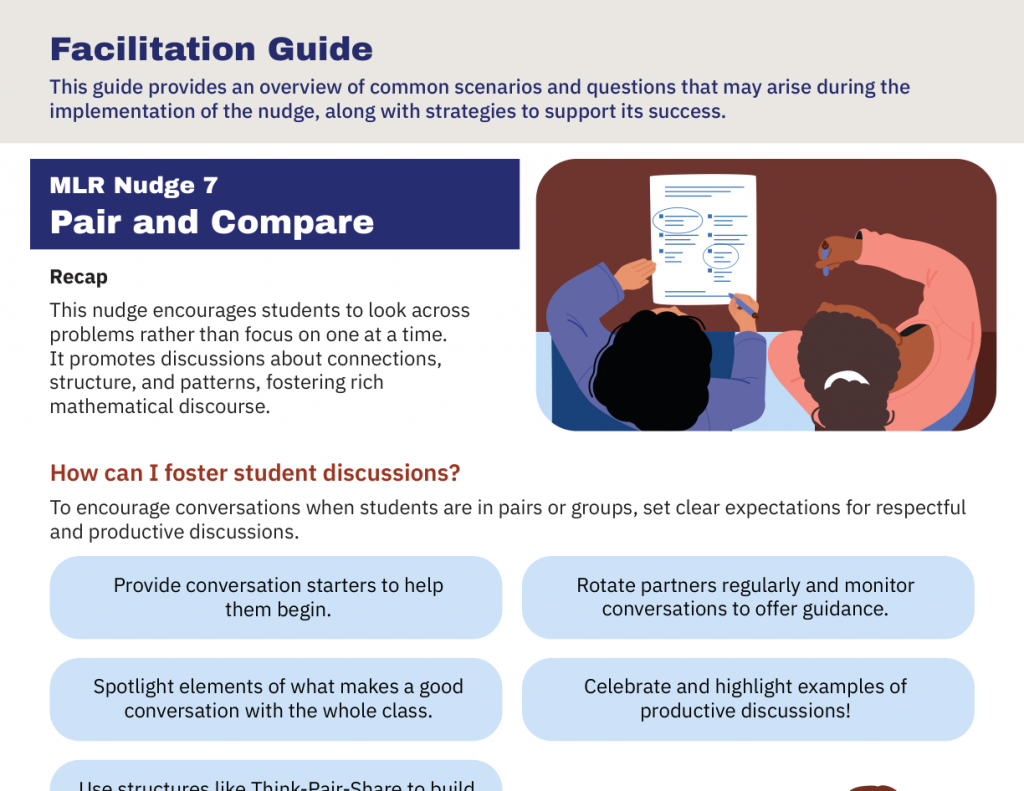
From a problem set, have students select two problems that they see as similar or different in some way. Then, have them pair up and try to guess what the other saw.
Animated Explainer Video
Get the gist fast. Watch a quick overview of what the instructional resource is and why it matters.
Implementation Guides
Download a one-page guide tailored to your grade brand with practical classroom applications.
Exemplar Video
See it in action. Watch real teachers using the instructional resources with students.
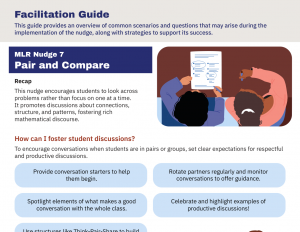
Facilitation Guide
Go deeper with key questions, tips and guidance for effective implementation.
Untangle your understanding.
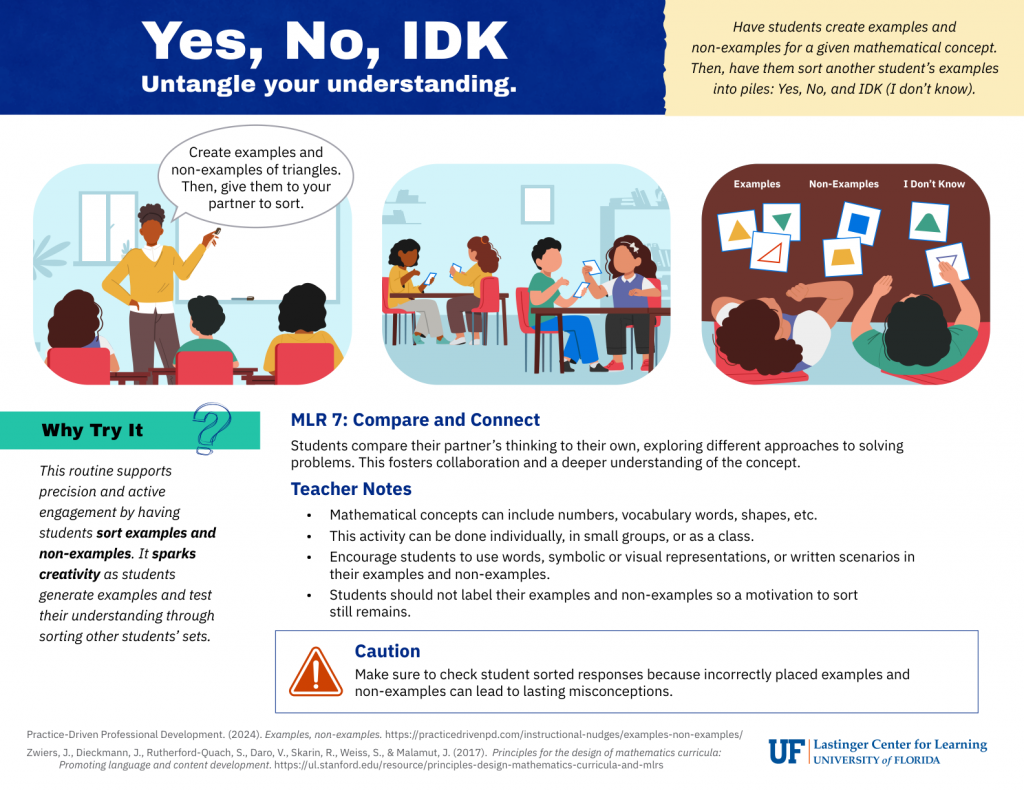
Yes, No, IDK
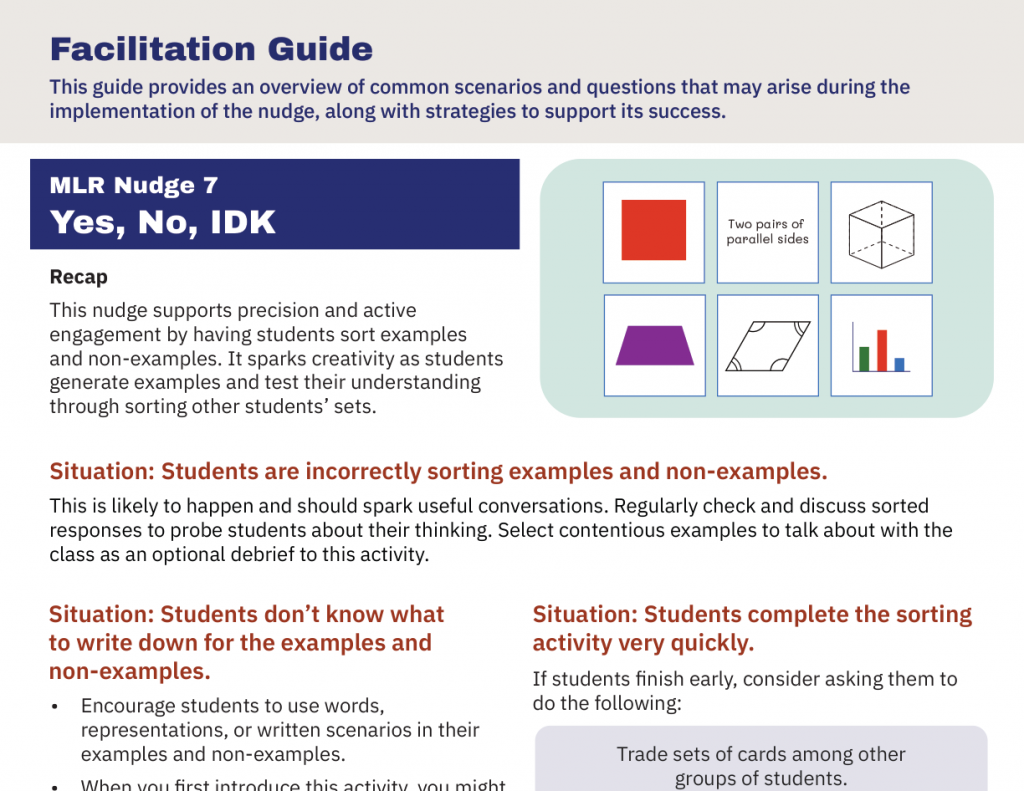
Have students create examples and non-examples for a given mathematical concept. Then, have them sort another student’s examples into piles: Yes, No, I Don’t Know
Animated Explainer Video
Get the gist fast. Watch a quick overview of what the instructional resource is and why it matters.
Implementation Guides
Download a one-page guide tailored to your grade brand with practical classroom applications.
Exemplar Video
See it in action. Watch real teachers using the instructional resources with students.
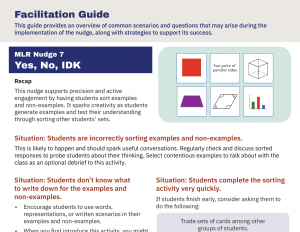
Facilitation Guide
Go deeper with key questions, tips and guidance for effective implementation.
There is more to a problem than its solution.
Pair & Compare
From a problem set, have students select two problems that they see as similar or different in some way. Then, have them pair up and try to guess what the other saw.
Animated Explainer Video
Get the gist fast. Watch a quick overview of what the instructional resource is and why it matters.
Implementation Guides
Download a one-page guide tailored to your grade brand with practical classroom applications.
Exemplar Video
See it in action. Watch real teachers using the instructional resources with students.
Facilitation Guide
Go deeper with key questions, tips and guidance for effective implementation.
Untangle your understanding.
Yes, No, IDK
Have students create examples and non-examples for a given mathematical concept. Then, have them sort another student’s examples into piles: Yes, No, I Don’t Know
Animated Explainer Video
Get the gist fast. Watch a quick overview of what the instructional resource is and why it matters.
Implementation Guides
Download a one-page guide tailored to your grade brand with practical classroom applications.
Exemplar Video
See it in action. Watch real teachers using the instructional resources with students.
Facilitation Guide
Go deeper with key questions, tips and guidance for effective implementation.
Zwiers, J., Dieckmann, J., Rutherford-Quach, S., Daro, V., Skarin, R., Weiss, S., & Malamut, J. (2017). Principles for the design of mathematics curricula: Promoting language and content development. https://ul.stanford.edu/resource/principles-design-mathematics-curricula-and-mlrs